

Ashley Hall News & Blog
Line Leaders and Cabooses: Laying the Tracks for Early Readers November 10, 2026
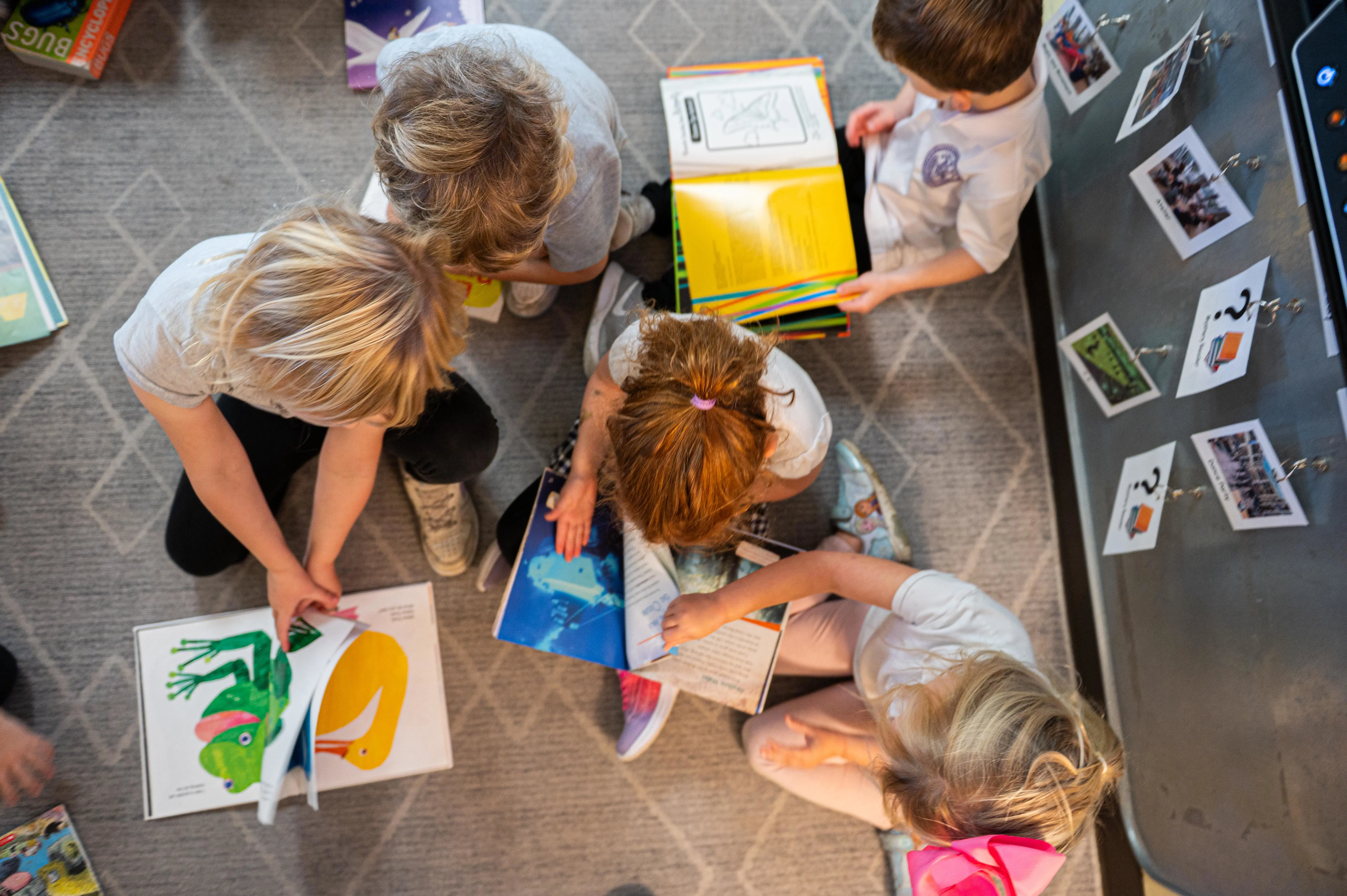
In Early School classrooms at Ashley Hall, literacy is an adventure explored through hands-on discovery, everyday language, and playful wonder. Below, Pre-Kindergarten Teacher Debbie O'Lunney shares how her classroom uses a Reggio Emilia-inspired approach to lay the tracks for emerging readers, transforming everyday moments into the building blocks of literacy and preparing students for Kindergarten and beyond.
In our Pre-K classroom, early literacy is woven into the fabric of our day, often in ways that may not resemble traditional reading instruction. Through our Reggio Emilia-inspired approach, we have the wonderful flexibility to follow children's interests, listen to their questions, and build upon the many “I wonder” moments that arise. Along the way, we find countless opportunities to lay the tracks for emerging readers, often without the children realizing just how much they are learning.
This flexibility allows us to introduce the same literacy concepts and terminology our students will encounter in Kindergarten, but in ways that make sense to four- and five-year-olds. The response from the children has been wonderful. Rather than relying on worksheets or repetitive drills, we invite them to discover letters, sounds, and words through experiences that spark genuine curiosity.
Our students eagerly ask whether Echo the Owl, a familiar puppet used to support literacy learning, will be flying into our classroom to explore letter sounds. Instead of expecting children to memorize every letter and sound in a formulaic way, we go on letter searches around the room. There is tremendous pride when a child announces that “book bin” has two words beginning with the /b/ sound! These discoveries belong to the children. They are noticing, connecting, and sharing what they know.
We also borrow language from familiar classroom experiences. When exploring beginning and ending sounds, we might ask, “Who is the line leader of this word?” or “What sound is riding in the caboose?” Because these are jobs the children know, the connection feels natural. We introduce the terms beginning sound and ending sound alongside these playful descriptions, preparing children for the language they will hear in Kindergarten.
Recently, on our class trip to Drum Island to search for shells, shark teeth, sea glass, and beach fossils, we saw this learning travel beyond our classroom. During the boat ride, we overheard two children talking about Captain Jim. One pointed out that the line leader of Jim's name was “juh-juh,” just like jug. Soon they were finding words that rhymed with Jim. After plenty of giggles, they continued their own word game, turning to other words from the adventure, including beach and captain. No teacher had suggested a sound game. The children simply brought their classroom discoveries into their playful conversation. Moments like this show us how much meaningful exposure can accomplish.
Our dramatic play kitchen has offered another opportunity to explore “cupcake words,” our playful name for compound words. Children discover how two words, each with its own meaning, can come together to make something new. Throughout the day, we also explore language through song, dance, and movement. Silly word combinations, rhymes, and rhythms become part of our play, sometimes with instruments in hand as we form our very own “Jazzy ABC Band!” As children clap, sing, and experiment with sounds, they are developing an ear for patterns in spoken language.
Journal writing offers another window into their growing understanding. Our prompts often come from the children's own questions and investigations, giving them real ownership of their work. Their drawings tell stories, and increasingly they attempt to represent words through letters and sounds not because someone requires it, but because they want to communicate their ideas. Much like losing a first tooth, certain milestones arrive when a child is ready. Some children are already making exciting connections; others are gathering experiences that will support discoveries next year. This does not mean learning is left to chance. We are intentional about the vocabulary we introduce and the skills we gently reinforce, while leaving room for each child's pace and curiosity.
Ultimately, we hope our students leave Pre-K with more than an emerging understanding of letters, sounds, and words. We want them to carry confidence, curiosity, and a genuine love of learning. We are laying the tracks now, knowing that each child's reading journey will unfold in its own time.