






Ashley Hall News & Blog
Making Waves: Building Confidence, Independence and Joy in the Madren Pool October 21, 2026
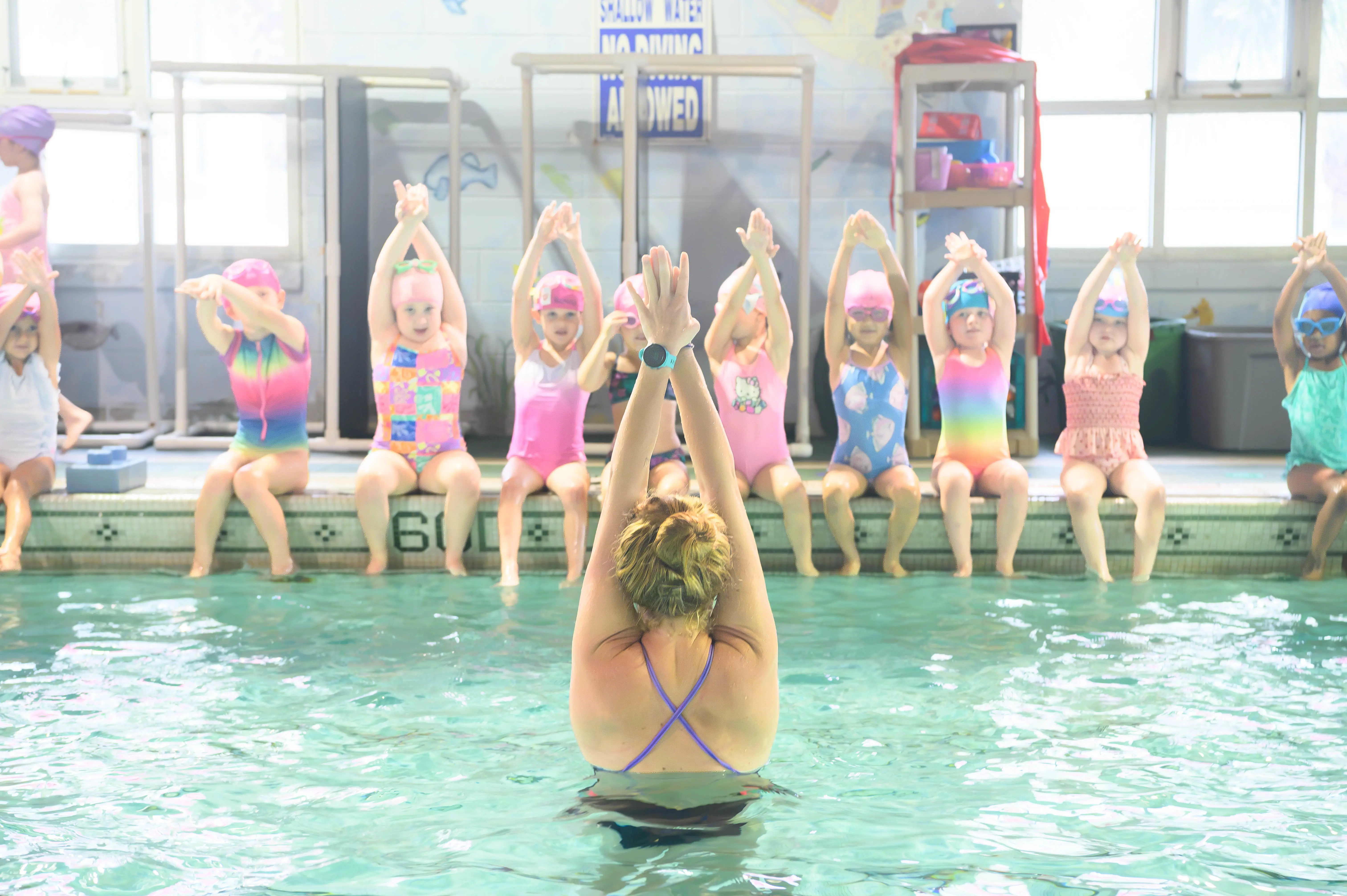
Before our youngest students ever splash into the Madren Pool, their swim journey begins right on dry land. Through singing, playful routines, and practicing deck steps like goggle prep and shoe removal, Early School students build essential trust and confidence long before taking their first dip. At Ashley Hall—Charleston’s only school with a fully integrated, year-round aquatics curriculum—time in the water isn't just about stroke technique; it's an essential space for nurturing brave, self-reliant learners.
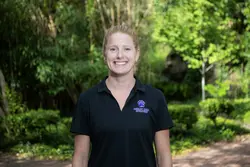
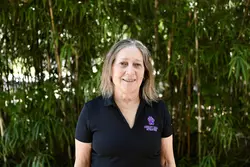
We sat down with Aquatics Director Missee Fox and Early and Lower School Swim Teacher Cassidy Rindge to learn how gentle water exposure, independent changing, and structured play help our youngest swimmers grow into confident, capable leaders from Early School to Varsity
Building Water Confidence
For many of our youngest Early School students, entering the pool can feel like a big step. How do you approach those first few weeks to help students feel safe, secure, and confident in the water?
Cassidy Rindge (CR): I am a big advocate for a slow-exposure approach. Over the last few years, we’ve identified the specific needs of different age groups and tailored our approach accordingly. All of Early School starts with "dry swim"—time spent outside singing, playing games, and building connections between teacher and student. Slowly, we bring them up to the pool deck to practice finding their spot, taking off shoes, putting on goggles, grabbing a barbell, and lining up to start class, all without getting in the water. Pre-K completes two of these visits before entering the water, Primary completes four, and Pre-Primary completes six. This intentional transition has dramatically cut down on tears and anxiety, especially for our youngest swimmers.
Missee Fox (MF): The benefit of having weeks of "dry swim" allows us to really get to know the children, helping them become familiar with us and build trust before ever stepping into the pool. This transition period has been a huge benefit over the last five years, giving us the dedicated time needed to introduce pool procedures and the aquatic environment at a comfortable pace.
The Evolution in the Pool
Can you share what the transformation looks like for an Early School student over their first month or two? What changes do you see between their very first lesson and just a few weeks down the line?
MF: We see familiarity, confidence, trust, and genuine excitement grow week by week. There is familiarity with pool procedures, confidence comes in knowing what is expected, and a deep trust built over time. Children are naturally drawn to water, and this gentle progression lets us create an environment where safe, joyful swimmers thrive.
CR: The most rewarding part of this transition is watching their personalities come out as they get comfortable. We watch their confidence begin to outweigh their hesitation—it’s a beautiful moment when their trust in us turns into bravery in themselves. Early School’s focus is water exploration and safety. We get a front-row seat as apprehension transforms into a love for the water, which turns into respect for the water, and ultimately grows into true skill and knowledge.
Life Skills Beyond Swimming
Swim day begins long before the kids jump in—it starts with getting dressed and preparing for the pool. How does independently changing into swim gear help foster self-reliance in our youngest learners?
CR: Starting independent dressing with our Pre-Primary students—especially when changing out of wet suits after class—is definitely a journey! But the growth that happens between August and May is unbelievable. One of the coolest things to see is how they learn to self-advocate by asking teachers for help, and even start helping one another. Missee and I strongly believe our job isn't just to teach them as swimmers, but as human beings—how can we help them build life skills that serve them everywhere? We’ve even started having "laundry helpers" with Lower School. Because we wash every class's bathing suit and any borrowed towels, we run a lot of laundry daily. The students love helping us fold towels and transport or flip the laundry. When we first introduced it, we thought they might find it tedious, but instead, they rush to get dressed after class just to be the day's laundry helper!
What Makes Ashley Hall Aquatics Unique
Ashley Hall is unique in Charleston for having swimming integrated directly into the Early and Lower School curriculum. What sets our aquatics program apart from traditional swim lessons outside of school?
MF: Traditional swim lessons usually last for a brief session, whereas our program spans nine full months of the academic year. Over that extended length of time, we are able—in almost every case—to guide a fearful non-swimmer into becoming a confident swimmer. Swimming continuously throughout the school year, and across multiple years, creates a far more sustainable aquatic foundation.
CR: Having swim integrated into their regular school day gives girls a fun, refreshing change of environment, too! Swimming alongside the classmates they spend every day with boosts their confidence; they naturally encourage, assist, and positively influence one another because of that pre-existing peer trust. Additionally, it took me a couple of years to fully appreciate how much our swimmers learn through play. External swim lessons are typically strictly instructional. Because we see our students so consistently, incorporating 10 minutes of structured free time into class allows students the agency to choose their own play. This organic exploration is one of the most natural ways for young children to gain comfort and ease in the water.
Risk-Taking and Safety
Learning to swim requires balancing physical safety with the willingness to try new things. How does taking healthy, calculated risks in the pool help students build a broader sense of resilience?
MF: Developing an "I can do it!" mindset in the pool directly translates to the classroom. That sense of capability carries over into reading and academic challenges. When a student learns to navigate water and master new skills at a young age, it builds a foundational confidence that sets them up for success across all areas of life.
The Brain-Body Connection
Research often highlights the connection between physical movement and cognitive development. How does the confidence and cross-body coordination built during swim class translate to academic focus and success in the classroom?
CR: Aligning with our International Baccalaureate curriculum in the Lower School, we balance skill development with real-world application. For example, when fourth graders were learning about the heart (both physically and figuratively), we connected classroom content to pool work. We discussed what it means to be a kind teammate with a "good heart," while demonstrating how swimming physically strengthens the heart muscle. We took our baseline heart rates, then completed an "Up and Out" five-minute challenge—diving in, swimming freestyle, climbing out of the pool, doing jumping jacks, and repeating the circuit for five minutes. The goal wasn't speed, but sustained movement with proper technique. Afterward, students measured their heart rates again to feel the difference. This exercise combined diving, freestyle strokes, rhythmic side-breathing, and upper-body strength with their science curriculum—reinforcing academic concepts through physical experience.
Overcoming Hesitation
When a student encounters a milestone that feels intimidating—like swimming across the deep end or diving—how do you coach them through that moment of doubt?
CR: Learning to be risk-takers is essential in the pool, whether it’s a beginner putting their face under water for the first time or an older student deciding to join a swim team. We emphasize that "Ashley Hall girls can do hard things," while reminding them of our number one rule: their job is to listen and have fun, and our job is to keep them safe. It is completely okay to feel scared, but we are right there to support them. We always ensure we only stretch a child's comfort zone as far as it is productive and empowering for them.
Varsity Momentum
Our Upper School Varsity Swim Team just wrapped up a fantastic season! How does the foundation built in Early and Lower School contribute to the strong team culture and success we see at the varsity level?
CR: Working with every new Pre-Primary class reminds me of the long-term journey we share—it’s a reciprocal relationship of trust and growth that develops over years, and varsity success relies heavily on that foundation. Building a genuine love for the water early on inspires girls to stay invested in the sport as they grow. We also display posters and trophies from our Varsity swimmers around the pool deck. This sparks curiosity and conversation among our younger students, giving them immediate role models and goals to strive for. Recently, some of our Varsity swimmers have even begun using their free periods to assist with Early School swim classes, which brings an extra layer of magic and connection to the deck!
Full-Circle Growth
For our varsity swimmers who started in the Madren Pool as young girls, what is it like seeing them lead and succeed today, and what advice do you have for our current Early School swimmers looking up to them?
MF: When I began teaching swimming here in 1977, swim was limited to three months at the start of the year and six weeks at the end. Over the last 20 years, we’ve expanded swimming to begin in Early School and run continuously throughout the entire school year. That year-round continuity ensures steady growth, strong skill retention, and a seamless pathway from early water safety to varsity athletics.
CR: Having taught and coached at Ashley Hall for several years now, I am really seeing the full impact of the systems we’ve established. We’ve added a developmental team run by Missee, as well as a JV team, bridging the gap between Lower School and Varsity (which has finished as State Runner-Up for two consecutive years!). While keeping swim fun and play-focused for our younger girls remains our top priority, building technical proficiency early on naturally feeds into our competitive programs—and we've loved seeing more of our youngest swimmers join summer swim leagues as a result!