


Ashley Hall News & Blog
Action Over Words: Launching Ashley Hall's 2026-27 Sustainability InitiativesNovember 3, 2026
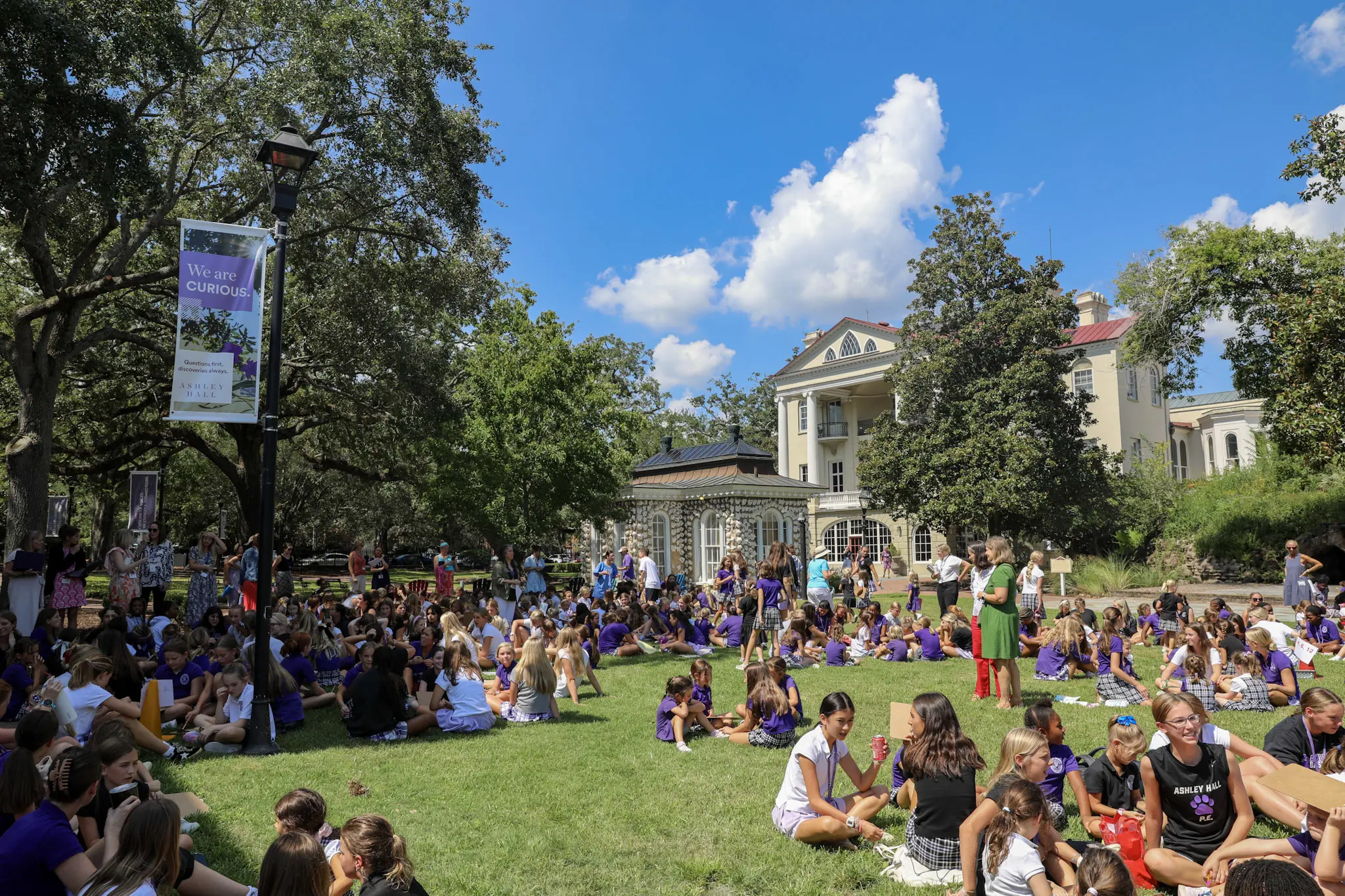
When schools weave environmental responsibility into everyday learning, the campus becomes a living laboratory. This year at Ashley Hall, sustainability moves beyond abstract concepts into tangible, hands-on student experiences.
Anchored by the 17 UN Sustainable Development Goals (SDGs), our 2026–2027 school year brings three ambitious initiatives across all divisions. From cross-country art exchanges to coastal monitoring and zero-waste dining experiments, our girls are connecting local habits to global outcomes.
1. The Traveling Mural Project
A Nationwide Art Exchange
How do we capture the spirit of Charleston and Ashley Hall, and how do we share it with the world? Inspired by librarian Shannon McClintock Miller’s global Library Voice initiative, our entire student body—from Early School to Upper School—is answering that question on a single 10-foot canvas.
Students across every grade level kicked off the first semester by brainstorming the cultural, historical, and natural elements that define our community. Guided by Ashley Hall art leaders, those ideas are being transformed into a unified piece of art. Once complete, the mural will be divided into ten one-foot strips. We will keep one section and mail nine away to partner schools across the United States—ranging from California to New Hampshire. In exchange, nine strips from across the country will arrive in Charleston, creating a collaborative, nationwide masterpiece that will tour our campus all year long.
2. The Blue Line Project & SeaRise
Visualizing Local Climate Data
Living in the Lowcountry means recognizing our dynamic relationship with water. Partnering with the South Carolina Aquarium, Ashley Hall is bringing the Blue Line Project directly to campus. This initiative uses site-specific artwork to make sea-level rise and storm surge data visually striking, accessible, and meaningful.
By depicting historical surge levels from Hurricane Hugo alongside localized projections for 2020, 2050, and 2100, the installation will spark conversations across science, math, and humanities classes. Designed with age-appropriate care and empathy for our city’s history, the project bridges scientific models with real-world observation.
To take action beyond campus, the project integrates the aquarium's SeaRise Citizen Science App via QR codes on the installation. Students and families can document local flooding events by uploading photos that pair directly with NOAA buoy data, helping local researchers and urban planners track regional climate trends.
3. Back-of-House Composting
Building Real-World Resilience
Real sustainability requires looking behind the scenes. This fall, we launched a student-led Back-of-House (BOH) Composting pilot, targeting kitchen prep waste and dining hall food scraps in the Early School and Kindergarten classes to divert organic material away from landfills and into regional composting systems.
Focusing on kitchen operations, students work alongside dining staff to build clean sorting routines and track actual campus waste metrics. Classes analyze weekly weight totals, translating cafeteria scraps into real-world math and ecology lessons. As of October 30, we have saved .6 tons of organic food waste from going into landfills and changed it into compost. That is almost 1200 lbs!
Equally important is the operational lesson. Changing daily routines and managing waste sorting requires flexibility, troubleshooting, and patience. Approaching this pilot with a growth mindset teaches our girls that meaningful environmental leadership isn't about immediate perfection—it's about persistence, operational problem-solving, and testing real solutions.
As these initiatives evolve, we look forward to sharing our progress, student data, and finished artwork with the broader Ashley Hall community.