



Ashley Hall Life
Independence in the Early SchoolNovember 7, 2025
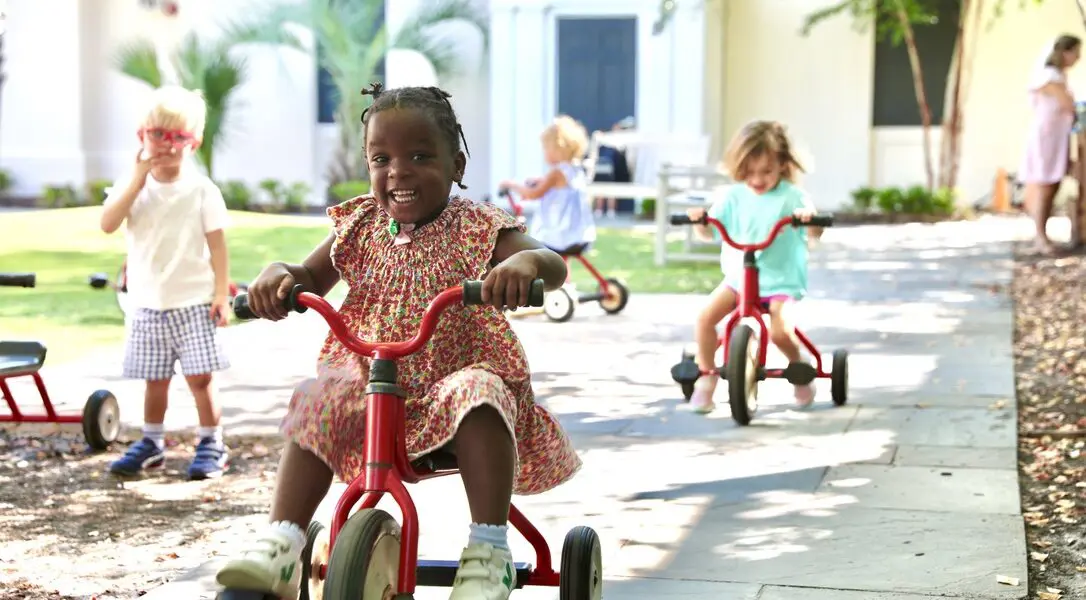
In the Early School, independence isn’t a milestone to be reached—it’s a rhythm we nurture every day. From zipping jackets after morning arrival to reflecting on the day’s discoveries before dismissal, each moment offers children a chance to practice confidence and self-reliance in joyful, meaningful ways. This month, Pre-Primary teacher Amy Kuenzel reflects on the beauty of these small steps toward independence—both for her students and for herself. In her piece, she invites us into a world where learning is alive with curiosity, courage, and connection, reminding us that growth—no matter our age—is always a hands-on, heart-first journey.
This year marks my first year in Pre-Primary, and let me tell you, it’s been a joyful, messy, shoe-on-the-wrong-foot kind of adventure. Our biggest celebration right now? Independence! We’re cheering as little hands zip jackets, pack rest bags, and wrestle swim bags into submission. I mean, just look at Charlotte’s face when she put on her swim backpack all by herself this month (below)—pure triumph! If you could bottle that look of pride, it would be the most powerful motivator on Earth.
Watching these small victories unfold reminds me that independence doesn’t just happen overnight. It’s practiced and nurtured. The same could be said for us teachers. We, too, are learners, constantly refining our craft, growing in confidence, and sometimes, metaphorically, trying to figure out which strap goes over which shoulder.
Professional development has always been one of my favorite parts of being an educator. Over the years, I’ve been fortunate to visit the Boulder Journey School, study in Reggio Emilia, Italy, and most recently, present at the Association for Constructivist Teaching Conference (ACT). My session, “Moving and Meaning: A Constructivist Take on Acquiring Piaget’s Knowledge Types,” explored the simple yet profound question: What is movement?
Movement is how children make sense of the world. It’s not just wiggling or running or dancing. It’s thinking in motion. Movement is the bridge between doing and understanding, the first language of learning. When a child learns to ride a tricycle, carries a backpack, or twirls with joy, they are exploring ideas about force, balance, gravity, and control. They are learning through their bodies before they ever find the words to describe what they know.
In our classrooms, we often talk about big ideas and processes in investigations. Those essential threads that sustain exploration and help us dig deeper into children’s thinking. Professional development experiences, especially in Reggio Emilia, have taught me to recognize these threads when they appear and to linger with them. Instead of rushing to the next activity, we pause, reflect, and ask, “What ideas are the children testing here? What theories are they building?”
That’s what I love about constructivist teaching. It’s alive. It breathes and shifts and grows with the children. The work isn’t about giving answers; it’s about creating space for questions to unfold. When I guide our two-year-olds now, I think about how to extend their curiosity and how to offer just enough challenge to keep the flame of investigation burning.
I often think back to my time in Reggio Emilia, the courageous, capable children I observed there who taught me more than any textbook ever could. They showed me that children are thinkers, artists, scientists, and philosophers long before they can spell those words. The educators in Reggio didn’t teach at them; they walked beside them, honoring every theory, every idea, every bold hypothesis a child made. I often return to the daily reminder they offered: to trust children’s capacity and to listen deeply.
When I first began preparing for the ACT conference, I admit I had a moment of doubt. As I scanned the program filled with Ph.D.s and professors, I wondered, “Am I out of my league?” But as the weekend unfolded, educators began asking, “Which presentations are from Ashley Hall?” They were eager to hear our stories, to learn about the meaningful and innovative ways our school nurtures young thinkers. And that’s when I realized: We are experts, too.
Teachers are researchers, constantly testing hypotheses in real time, sometimes in the building area, sometimes in small-group snack. We collect data through observation, reflection, and documentation. We adjust, revise, and celebrate discoveries, just like the children do.
Coming back from ACT, I felt like Charlotte again, proud, inspired, and ready to help others “put on their backpacks.” That’s what professional growth does: it fills you with energy and humility all at once. It reminds you that learning never stops and that joy is often found in the struggle to try something new.
So yes, professional development has changed my teaching, but more importantly, it’s changed how I see teaching. It’s about connection, courage, and curiosity. It’s about remembering that we’re all in motion, moving together, teachers and children alike, toward greater understanding and wonder.
And as I watch Charlotte march out to see Ms. Cassidy and Missee Fox at the pool, backpack snug and smile wide, I can’t help but think: maybe she’s not the only one learning to carry something important all by herself.
Ultimately, the true measure of professional growth lives in the classroom. Since returning from these experiences, I’ve noticed the children approaching challenges with more persistence and joy. They are taking greater ownership of their routines and ideas, zipping, pouring, building, and problem-solving with growing confidence. My renewed perspective has helped me slow down, observe more carefully, and honor each child’s process. Their curiosity is deeper, their collaboration stronger, and their voices louder. Every day, I see how our learning as teachers directly shapes theirs.
Amy Kuenzel, Early School Faculty Member