From their first days on campus, our youngest learners are thoughtfully connected to the life and work of Ashley Hall, invited into shared experiences that help them see themselves as part of something larger. Our work with the United Nations Sustainable Development Goals provides a new lens, reminding us that even our youngest students can engage with meaningful global ideas. In this piece, Tyler Moseley, our Community Partnerships and Global Education Coordinator, offers a closer look at how these connections come to life through relationships, partnerships, and the everyday experiences of our Early School classrooms.
This year, our school-wide commitment to the 17 United Nations Sustainable Development Goals invited us to consider what it means to engage even our youngest students in work that is inherently global. Rather than simplifying these ideas, we grounded them in lived experience. Sustainability became something children could see, touch, and influence—from composting and conserving water to participating in food drives, exploring where food comes from, and caring for shared spaces. These were not isolated lessons, but meaningful contributions to a collective effort unfolding across the entire school.
This work is made possible through relationships. Partnerships with organizations such as the Lowcountry Food Bank, local parks, the Marsh Project, MUSC, and collaborations with other divisions like the Lower School Bee Club extend the classroom into the wider Charleston community. Equally vital are our families, who bring their expertise and passions into the school, helping children connect their questions to real-world contexts. In the Early School, learning is not contained within four walls—it is co-constructed through a network of relationships that expands what is possible.
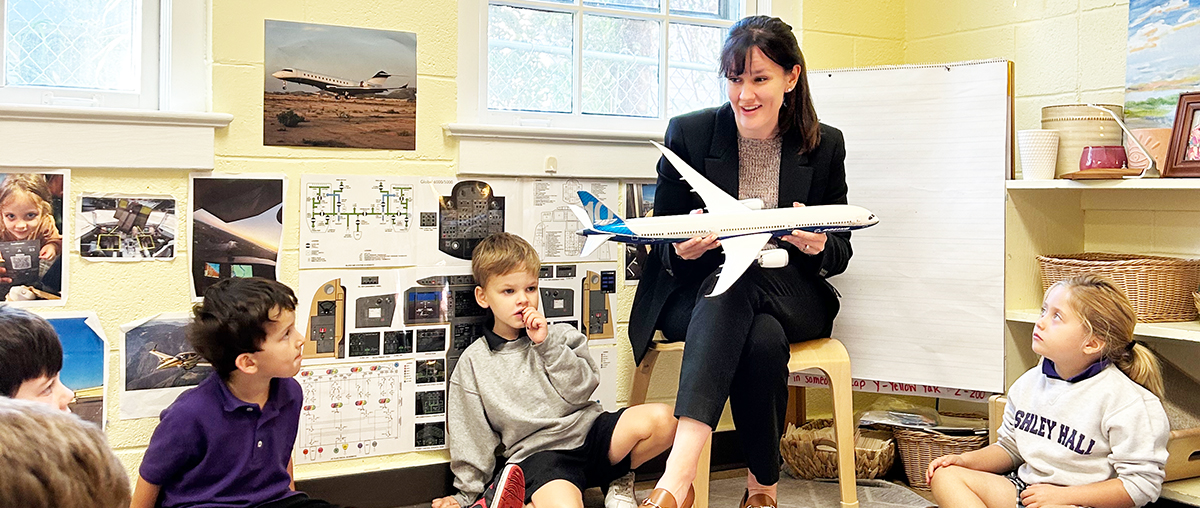
One class’s study of airplanes offers a window into this process. What began as a spark of curiosity grew into model-building, conversations with pilots, and explorations of maps and global travel. Through community connections, an idea took flight—expanding from a single interest into a broader understanding of how people, places, and systems are interconnected.
These experiences are woven into the fabric of each day. From shared meals and conversations that build belonging, to collaborative inquiry and reflection, children are constantly practicing what it means to be part of a community. They learn that their ideas matter, that their actions have impact, and that they are connected to something larger than themselves.
By intentionally looping Early School students into the work of the broader campus, we cultivate more than knowledge—we nurture a sense of agency, empathy, and responsibility. Community becomes the classroom, and in that classroom, children begin to understand themselves as citizens of a shared and ever-expanding world.

Tyler Moseley
Community Partnerships and Global Education Coordinator
Share: