Ashley Hall’s Middle and Upper School students spent a recent morning exploring big questions, bold ideas, and exciting career paths during this year’s STEM Day. It was a dynamic celebration of science, technology, engineering, and math that highlighted not just what our students can do, but who they can become.
The day began with a full-panel session featuring an impressive group of leaders from fields spanning pediatric neurology, aerospace engineering, AI, environmental science, cybersecurity, water quality, design, and engineering leadership. Student moderators guided the conversation with thoughtful, probing questions that brought out personal stories, unexpected career paths, and practical advice.
Dr. Lela Lewis, Division Chief of Pediatric Neurology at the Medical University of South Carolina shared a vivid childhood memory of her mother (also a physician) bringing home a sheep’s brain after teaching a hospital class; a moment that sparked her lifelong fascination with the human brain. “Seeing a child’s development over time and how the brain changes over time has always been fascinating to me,” Dr. Lewis shared. That early curiosity led her through medical school, Air Force service, and advanced training at Johns Hopkins, and ultimately to her leadership role at MUSC. Her story was a powerful reminder that big careers often begin with small moments of wonder.
Students also heard from Rebecca Gleason, Head of Global Industry Engagement for AI & Business Messaging at Meta, whose path to tech leadership was anything but traditional. A liberal arts major who didn’t grow up dreaming of a career in AI, Ms. Gleason emphasized that success in STEM isn’t limited to one specific degree or background. “No matter what degree you choose to pursue, the most important thing you can do is be able to communicate with people in a language they can hear,” she said. A message that resonated deeply with students who are considering how their own interests might intersect with STEM fields.
The panel showcased a remarkable range of expertise. Dr. Lynn Sargent, a structural analysis engineer at Boeing, spoke about research and innovation in aerospace and AI-driven digital transformation. Cole Rise, Director of Design for Microsoft AI and designer of the original Instagram icon, shared how creativity and technology intersect in powerful ways.
From The Citadel, Dr. Deepti Joshi, Dr. Shadi Sadeghpour, Dr. Farhath Zareen, and Dr. Nahid Vesali highlighted cutting-edge work in artificial intelligence, cybersecurity, bioinformatics, engineering leadership, and machine learning, and emphasized the importance of undergraduate research and mentorship.
Environmental leaders also took the stage. Allison Montgomery, Conservation Planner at Westervelt Ecological Services, described using data-driven analysis to protect wetlands and natural resources. Olivia Flynn, Environmental Engineer and Associate Vice President at Hazen and Sawyer, and Guinn Wallover of Mount Pleasant Waterworks, demonstrated how engineering and environmental science directly impact community health and sustainability.
Rounding out the healthcare perspective, Lauren Fogelgren, Head of Health Services at Ashley Hall and a practicing physician assistant, connected clinical care with evidence-based practice and compassion, reminding students that STEM careers are ultimately about improving lives.
After the morning panel, students broke into grade-level groups for smaller, more interactive sessions. These in-depth conversations and hands-on activities allowed students to dive deeper into topics like AI ethics, water treatment systems, cybersecurity threats, neurological research, and engineering project management. The smaller setting created space for candid questions, mentorship, and meaningful dialogue about internships, college majors, and work-life balance.
Throughout the day, one theme rose above the rest: there is no single path into STEM. Whether sparked by a childhood memory, a love of the outdoors, a passion for problem-solving, or an interest in storytelling and design, each panelist demonstrated that curiosity, resilience, and communication are just as important as technical skill.
STEM Day at Ashley Hall did a wonderful job of highlighting the different career options available to students, but it was also about possibility. It was a celebration of leaders in complex, innovative fields and an invitation for our students to imagine themselves doing the same.
Technology is everywhere; new tools and AI features are appearing daily. Some celebrate these innovations as ways to expand access to skills like coding and design. Others raise important questions about well-being and the impact of screens on young children.
In the Early School, we begin with a different question: How can technology become a language for thinking? When used thoughtfully and intentionally with our youngest learners, technology is not entertainment. It is not a pacifier. It is not a replacement for blocks, clay, paper, light, or books. Instead, it lives alongside these materials as another expressive language; one that allows children to research, design, document, test theories, and share their thinking.
Tools for Inquiry, Not Distraction
When many people hear “technology,” they immediately think of screens. In our classrooms, however, technology includes microscopes, projectors, light tables, 3D printers, and cameras. These tools are present in ways that invite exploration and provoke questions.
It is a joy to watch children experiment with shapes on the light table, noticing symmetry, transparency, and pattern. In the fall, I observed projectors casting images connected to classroom investigations. In one room with students who were studying trees, projected images extended the children’s thinking. Together, we discussed how iPads could be used as tools for photography. The class took a “field trip” to Senior Lawn to explore point of view—crouching low, stretching tall, capturing bark texture, branches against the sky, and shifting light.
The iPad became a research tool. A storytelling tool. A way to revisit and reflect. The lesson was simple but powerful: technology is something we use with purpose. It is active, not passive.
Making, Building, Coding
In another classroom, children were exploring building and visited our growing maker space in the library to see 3D printers in action. Watching a design move from digital concept to physical object sparked questions about structure, stability, and process. The printer was not the focus, the thinking was.
Early coding is happening, too. When children work with some of these tools, they are not “just pressing buttons.” They are predicting outcomes, sequencing steps, revising plans, and persisting through challenges. Coding becomes an exercise in logic, collaboration, and problem-solving.
The same is true when children enter the Star Lab or use digital tools to document their discoveries. They are testing hypotheses. Communicating ideas. Engaging in design thinking.
Modeling Thoughtful Use
Our children are always watching us. They see adults using phones to send messages, search for information, FaceTime family, or ask digital assistants questions. Technology is already embedded in their world. Our responsibility is to model intentional, balanced use.
Teachers may choose to use iPads for documentation or music with intention. Children see the use of devices with clear purpose, to photograph an investigation, record observations, or share their learning with others.
The Library as a Hub of Innovation
Our library continues to evolve as a vibrant hub where books, materials, and digital tools intersect. The maker space, Star Lab, and research tools live alongside stories, natural materials, and studio spaces.
Children move fluidly between media: sketching a design, building with blocks, investigating for research, and projecting images to spark discussion. The boundaries between “digital” and “hands-on” dissolve. All of it is learning. All of it is language. In a world filled with screens, our goal is not to shield children from technology nor to immerse them in it. Instead, we guide them in using it thoughtfully.
When technology is treated as a language for thinking, it becomes what it was always meant to be: a medium for invention, imagination, and connection.
Susannah Elliott
Technology Integration Specialist
Welcome to Panther Recap—your look at the latest moments, milestones, and momentum across Ashley Hall Athletics. Spring sports are off to a powerful start at Ashley Hall, and the Panthers are building momentum across every level of competition. From strong season finishes to standout performances and record-breaking goals, there is plenty to celebrate—and even more ahead in March.
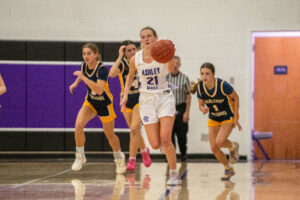
Basketball Finishes Strong
Panther Basketball closed out the season with an impressive 47–27 win over Charleston Collegiate in their final game. The team’s hard work and determination were on full display as they finished the year on a high note.
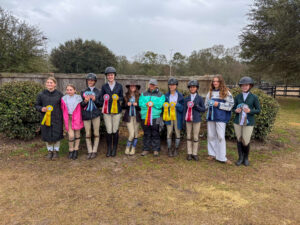
Equestrian Earns Reserve Champion Honors
Equestrian traveled to Georgia for a standout weekend of competition, where multiple riders won their individual classes. The Upper School team capped it off by bringing home Reserve Champion honors—a testament to their talent, preparation, and teamwork.
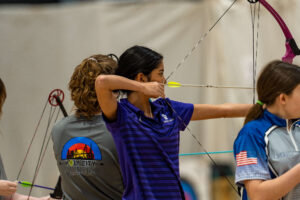
Archery Reaches New Heights
Big news from the range: Upper School archer Veda Patel ’27 has qualified for the State Championship in Columbia. The team will compete on March 4–5, and we are cheering them on as they take aim at a strong showing on the state stage.
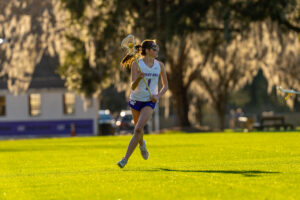
Lacrosse Starts Off Strong
Varsity Lacrosse opened their season in dominant fashion with a 14–2 victory over Bluffton High School. Junior captain Kate Murphy ’27 shared what made the performance so strong:
“Something that was most crucial to our winning performance was our ability to have so many different people on the field contribute. It’s really special to have a team with such a variety of skills that can contribute to one greater goal.”
With a young and growing roster, leadership and communication are already proving to be key strengths.
Track & Field Sets Big Goals
As Track & Field gears up for competition, Madison Middleton ’28 has her sights set high. After an impressive season last year, she’s focused on pushing even further:
“I’d like to hold the record in high jump and break my long jump record that I currently have… and also qualify for outdoor nationals.”
The team travels to Summerville for the Azalea Invitational on Saturday, March 7, and excitement is building for another strong season—especially with eyes already on the State Championship later this spring.
Looking Ahead
Archery heads to Columbia for the State Championship on March 4 and 5.
Track & Field travels to Summerville for the Azalea Invitational on Saturday, March 7.
Soccer hosts Porter-Gaud on March 20.
Lacrosse is back at home against Pinewood on Thursday, March 26.
Thank you for following this month’s Panther Recap. Stay connected with @AshleyHallPanthers for ongoing highlights, announcements, and stories from across our athletic community. PQV, Panthers!
Ashley Hall students are proud to have taken part in the IB Loves SC Week of Service, Learning, and Citizenship, a new statewide initiative led by South Carolina IB Schools (SCIBS). This coordinated week brought together IB students across South Carolina to live out the IB mission by engaging in meaningful service and active citizenship within their communities.
At Ashley Hall, both Lower School and Middle School students celebrated IB Loves SC through hands-on experiences that connect learning to real-world impact and encourage students to care for the world around them.
Middle School: Learning Through Environmental Stewardship
Ashley Hall’s Middle School marked IB Loves SC Day through a series of learning and service experiences focused on environmental education, restoration, and community care. In partnership with The M.A.R.S.H. Project and other local organizations, students explored how thoughtful stewardship can protect Charleston’s natural ecosystems.
Our students learned about native plants, sustainable gardening, and the role these plants play in supporting pollinators, birds, and healthy waterways. Through hands-on gardening and seed-starting activities, students developed an understanding of their local growing environment while contributing to the care and maintenance of Ashley Hall’s campus gardens.
Students are also engaged in community cleanups, helping remove litter that threatens wildlife and pollutes waterways. These experiences emphasize responsible citizenship and encourage students to see themselves as caretakers of their community. In addition, Middle School students learned about composting and waste reduction, discovering how small changes at home can significantly reduce household waste. By sharing what they learn with their families, students extend the impact of IB Loves SC Day beyond campus. Grade 7 and 8 students are pictured below with the trash they collected.
Lower School: Caring for Our Coast
Ashley Hall’s Lower School launched the week with a coastal conservation experience rooted in service and curiosity. Fourth grade students partnered with Charleston Waterkeeper for a marsh cleanup and learned about the impact of microplastics and other pollution on local waterways, pictured below.
Through this hands-on experience, students saw firsthand how caring actions—both big and small—help protect Charleston’s coastal environment. “Our girls loved getting their hands dirty while caring for a small section of our local marsh,” said Elizabeth Flowers, IB PYP Coordinator and Lower School Faculty Member. “Beyond the cleanup itself, it was meaningful for them to learn about Charleston Waterkeeper and the important work the organization does to protect our waterways. We talked about the family-friendly events and volunteer opportunities Waterkeeper offers, and how this small act of service at school can spark even bigger action at home.”
Living the IB Mission Together
IB Loves SC highlights the power of service learning at every age. Across divisions, Ashley Hall students are learning that making a difference starts with awareness, grows through action, and thrives when communities come together.
We are proud to join IB schools across South Carolina in this celebration of learning, service, and citizenship, and to see our students lead with care, purpose, and compassion.
Ashley Hall’s annual Book Festival is a spring tradition that brings our entire campus together to celebrate our shared love of reading. This year, we’re thrilled to host a week of exciting events from Monday, February 9, through Friday, February 13.
Book Fair Location + Hours
There will be two book fair locations on campus: the LoDome for Early School through sixth-grade readers (Scholastic) and Jenkins Hall Atrium for grades 7-12 (hosted by Buxton Books). Shopping hours are as follows:
Monday, February 9 – Thursday, February 12 | 7:30 a.m. – 3:30 p.m. Friday, February 13 | 7:30 a.m. – 12:00 p.m. (Fathers’ & Friends’ Morning, Half-Day Dismissal)
Please note that the Lower School Scholastic Book Fair will be held all week. The book fair for Middle and Upper School will be held Wednesday through Friday and curated by Buxton Books.
☕ A pop-up coffee shop from Grit Bakery will be on campus each morning, offering freshly brewed coffee and pastries for purchase.
How to Shop
Checks sent to the school should be made out to Ashley Hall. Cash and credit cards are also accepted. Another option is to use eWallet, a simple digital payment system hosted by Scholastic, available online or in person. Babas on Canon will also host a pop-up morning coffee bar daily with drinks and snacks for sale.
In a Reggio Emilia–inspired classroom, children are understood to have many languages for expressing their thinking and emotions—movement being one of the most powerful. Young children communicate, regulate, and make meaning through their bodies long before they can fully articulate their feelings with words. When we honor movement as a language, we create space for children to develop self-regulation in ways that feel natural, joyful, and deeply connected to their learning. This inquiry into birds and feathers offers a beautiful example of how physical movement and social-emotional growth are thoughtfully woven into the everyday life of our pre-Kindergarten classrooms.
Elizabeth Johnson ’95, Early School faculty member and pre-Kindergarten teacher, offers a window into this work through her classroom’s recent inquiry into birds and feathers—an exploration that beautifully illustrates how movement, observation, and social-emotional development are woven together in the everyday life of our Early School.
Over the past few weeks, the children in our pre-Kindergarten class have been deeply engaged in studying birds and feathers. They have been watching how birds move, where they rest, how feathers respond to wind and water, and how wings help bodies lift, glide, and pause. Feathers have become a powerful material for observation, inviting children to notice texture, lightness, pattern, and movement. What may appear to be joyful observation and imaginative play is also meaningful work in developing self-regulation.
As children watched birds flutter, perch, and take off, they began to notice that movement is thoughtful rather than random. Birds flap their wings, rest, shake off water, or allow the wind to carry them—each action serving a purpose. Feathers play an important role in this process. Children observed how feathers flicker in the wind, fall slowly to the ground, or shift with a gentle touch.
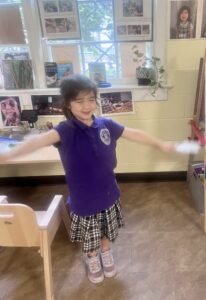
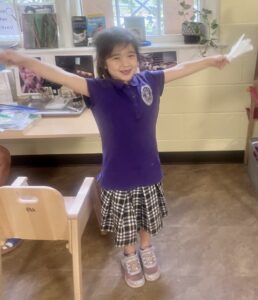
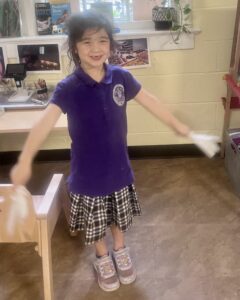
Through these experiences, children explored their own bodies in similar ways. They flapped their arms, wiggled, slowed down, and tiptoed carefully so as not to scare a bird. In these moments, children were practicing listening to their bodies, adjusting their energy, and responding thoughtfully to their environment.
This kind of learning supports self-regulation in powerful and developmentally appropriate ways. Rather than asking children to sit still, we invite them to move with intention, just as birds do. Movement, drawing, storytelling, and working with materials like feathers allow children to practice shifting between excitement and calm, action and rest. Watching a feather float slowly or settle gently on the ground offers children a visual and sensory reminder that slowing down can feel good and purposeful.
As the children flap, spin, and release feathers, their bodies begin to find rhythm and calm. These playful movements help children release energy, settle themselves, and build emotional balance. Through this sensory play, children practice regulating their emotions in ways that feel authentic and embodied.
“If I flap like this, I can fly! Watch me—flap flap!”
Families can support this work at home by noticing birds together, collecting fallen feathers, or observing how the wind moves leaves and other lightweight objects. Gentle questions, such as What do you think the bird needs right now? How does the feather move? or How does your body feel when you move fast or slow? help extend children’s awareness and reflection.
We are excited to continue this inquiry alongside another pre-K classroom and to extend it during our upcoming field trip to Mulberry Pond Park, where children will observe birds, feathers, and habitats firsthand. On February 10, Birds of Prey will visit the Early School for a demonstration lesson. We can’t wait to see how the children’s thinking, curiosity, and self-awareness continue to take flight!
Ashley Hall is a K-12 independent school for girls, with a co-ed preschool, committed to a talented and diverse student population. We consider for admission students of any race, color, religion, and national or ethnic origin.

 Varsity Lacrosse opened their season in dominant fashion with a 14–2 victory over Bluffton High School. Junior captain Kate Murphy ’27 shared what made the performance so strong:
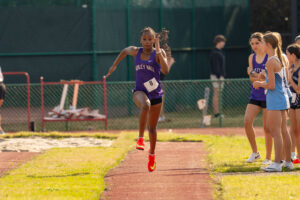 As Track & Field gears up for competition, Madison Middleton ’28 has her sights set high. After an impressive season last year, she’s focused on pushing even further: