



Ashley Hall Life
Birds, Feathers, and Self RegulationJanuary 30, 2026
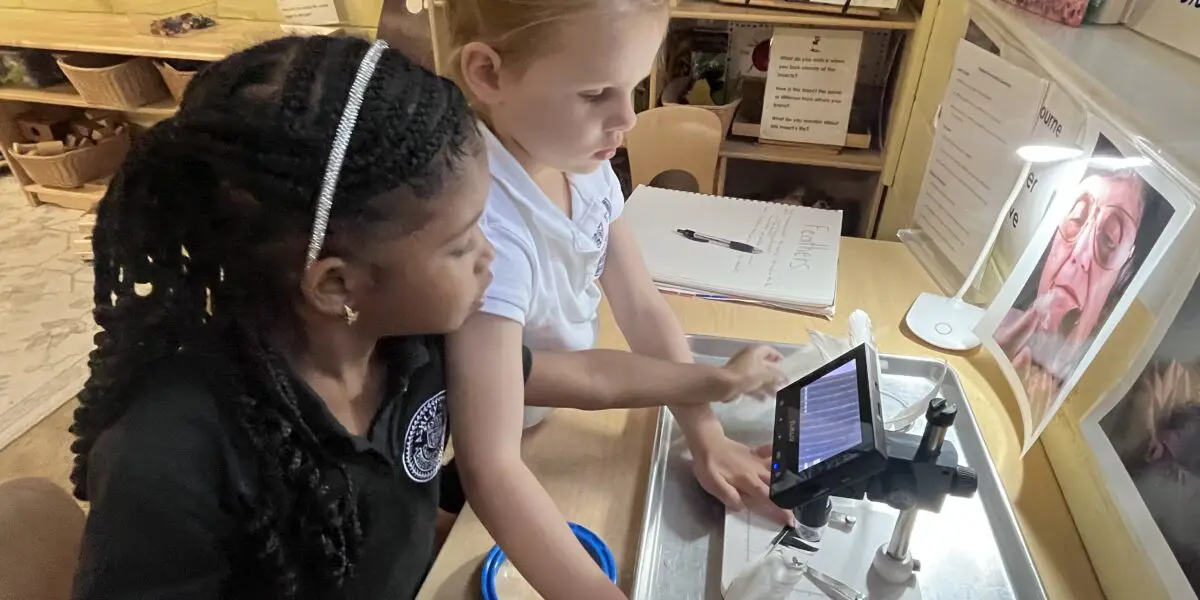
In a Reggio Emilia–inspired classroom, children are understood to have many languages for expressing their thinking and emotions—movement being one of the most powerful. Young children communicate, regulate, and make meaning through their bodies long before they can fully articulate their feelings with words. When we honor movement as a language, we create space for children to develop self-regulation in ways that feel natural, joyful, and deeply connected to their learning. This inquiry into birds and feathers offers a beautiful example of how physical movement and social-emotional growth are thoughtfully woven into the everyday life of our pre-Kindergarten classrooms.
Elizabeth Johnson ’95, Early School faculty member and pre-Kindergarten teacher, offers a window into this work through her classroom’s recent inquiry into birds and feathers—an exploration that beautifully illustrates how movement, observation, and social-emotional development are woven together in the everyday life of our Early School.
Over the past few weeks, the children in our pre-Kindergarten class have been deeply engaged in studying birds and feathers. They have been watching how birds move, where they rest, how feathers respond to wind and water, and how wings help bodies lift, glide, and pause. Feathers have become a powerful material for observation, inviting children to notice texture, lightness, pattern, and movement. What may appear to be joyful observation and imaginative play is also meaningful work in developing self-regulation.
As children watched birds flutter, perch, and take off, they began to notice that movement is thoughtful rather than random. Birds flap their wings, rest, shake off water, or allow the wind to carry them—each action serving a purpose. Feathers play an important role in this process. Children observed how feathers flicker in the wind, fall slowly to the ground, or shift with a gentle touch.
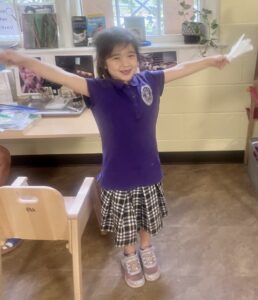
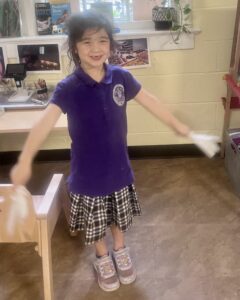
Through these experiences, children explored their own bodies in similar ways. They flapped their arms, wiggled, slowed down, and tiptoed carefully so as not to scare a bird. In these moments, children were practicing listening to their bodies, adjusting their energy, and responding thoughtfully to their environment.
This kind of learning supports self-regulation in powerful and developmentally appropriate ways. Rather than asking children to sit still, we invite them to move with intention, just as birds do. Movement, drawing, storytelling, and working with materials like feathers allow children to practice shifting between excitement and calm, action and rest. Watching a feather float slowly or settle gently on the ground offers children a visual and sensory reminder that slowing down can feel good and purposeful.
As the children flap, spin, and release feathers, their bodies begin to find rhythm and calm. These playful movements help children release energy, settle themselves, and build emotional balance. Through this sensory play, children practice regulating their emotions in ways that feel authentic and embodied.
“If I flap like this, I can fly! Watch me—flap flap!”
Families can support this work at home by noticing birds together, collecting fallen feathers, or observing how the wind moves leaves and other lightweight objects. Gentle questions, such as What do you think the bird needs right now? How does the feather move? or How does your body feel when you move fast or slow? help extend children’s awareness and reflection.
We are excited to continue this inquiry alongside another pre-K classroom and to extend it during our upcoming field trip to Mulberry Pond Park, where children will observe birds, feathers, and habitats firsthand. On February 10, Birds of Prey will visit the Early School for a demonstration lesson. We can’t wait to see how the children’s thinking, curiosity, and self-awareness continue to take flight!