Ashley Hall’s annual Book Festival is a spring tradition that brings our entire campus together to celebrate our shared love of reading. This year, we’re thrilled to host a week of exciting events from Monday, February 9, through Friday, February 13.
Book Fair Location + Hours
There will be two book fair locations on campus: the LoDome for Early School through sixth-grade readers (Scholastic) and Jenkins Hall Atrium for grades 7-12 (hosted by Buxton Books). Shopping hours are as follows:
Monday, February 9 – Thursday, February 12 | 7:30 a.m. – 3:30 p.m.
Friday, February 13 | 7:30 a.m. – 12:00 p.m. (Fathers’ & Friends’ Morning, Half-Day Dismissal)
Please note that the Lower School Scholastic Book Fair will be held all week. The book fair for Middle and Upper School will be held Wednesday through Friday and curated by Buxton Books.
☕ A pop-up coffee shop from Grit Bakery will be on campus each morning, offering freshly brewed coffee and pastries for purchase.
How to Shop
Checks sent to the school should be made out to Ashley Hall. Cash and credit cards are also accepted. Another option is to use eWallet, a simple digital payment system hosted by Scholastic, available online or in person. Babas on Canon will also host a pop-up morning coffee bar daily with drinks and snacks for sale.
Can’t make it to campus?
Online shopping will also be available through February 22!
In a Reggio Emilia–inspired classroom, children are understood to have many languages for expressing their thinking and emotions—movement being one of the most powerful. Young children communicate, regulate, and make meaning through their bodies long before they can fully articulate their feelings with words. When we honor movement as a language, we create space for children to develop self-regulation in ways that feel natural, joyful, and deeply connected to their learning. This inquiry into birds and feathers offers a beautiful example of how physical movement and social-emotional growth are thoughtfully woven into the everyday life of our pre-Kindergarten classrooms.
Elizabeth Johnson ’95, Early School faculty member and pre-Kindergarten teacher, offers a window into this work through her classroom’s recent inquiry into birds and feathers—an exploration that beautifully illustrates how movement, observation, and social-emotional development are woven together in the everyday life of our Early School.
Over the past few weeks, the children in our pre-Kindergarten class have been deeply engaged in studying birds and feathers. They have been watching how birds move, where they rest, how feathers respond to wind and water, and how wings help bodies lift, glide, and pause. Feathers have become a powerful material for observation, inviting children to notice texture, lightness, pattern, and movement. What may appear to be joyful observation and imaginative play is also meaningful work in developing self-regulation.
As children watched birds flutter, perch, and take off, they began to notice that movement is thoughtful rather than random. Birds flap their wings, rest, shake off water, or allow the wind to carry them—each action serving a purpose. Feathers play an important role in this process. Children observed how feathers flicker in the wind, fall slowly to the ground, or shift with a gentle touch.
Through these experiences, children explored their own bodies in similar ways. They flapped their arms, wiggled, slowed down, and tiptoed carefully so as not to scare a bird. In these moments, children were practicing listening to their bodies, adjusting their energy, and responding thoughtfully to their environment.
This kind of learning supports self-regulation in powerful and developmentally appropriate ways. Rather than asking children to sit still, we invite them to move with intention, just as birds do. Movement, drawing, storytelling, and working with materials like feathers allow children to practice shifting between excitement and calm, action and rest. Watching a feather float slowly or settle gently on the ground offers children a visual and sensory reminder that slowing down can feel good and purposeful.
As the children flap, spin, and release feathers, their bodies begin to find rhythm and calm. These playful movements help children release energy, settle themselves, and build emotional balance. Through this sensory play, children practice regulating their emotions in ways that feel authentic and embodied.
“If I flap like this, I can fly! Watch me—flap flap!”
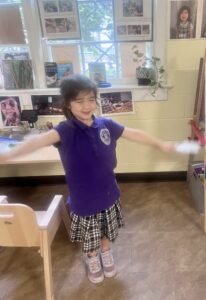
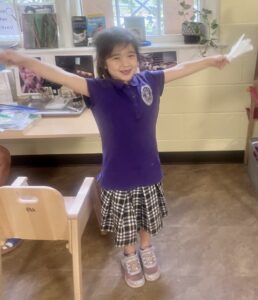
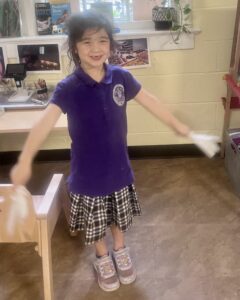
Families can support this work at home by noticing birds together, collecting fallen feathers, or observing how the wind moves leaves and other lightweight objects. Gentle questions, such as What do you think the bird needs right now? How does the feather move? or How does your body feel when you move fast or slow? help extend children’s awareness and reflection.
We are excited to continue this inquiry alongside another pre-K classroom and to extend it during our upcoming field trip to Mulberry Pond Park, where children will observe birds, feathers, and habitats firsthand. On February 10, Birds of Prey will visit the Early School for a demonstration lesson. We can’t wait to see how the children’s thinking, curiosity, and self-awareness continue to take flight!
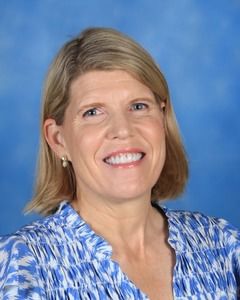
Elizabeth Johnson ’95
Pre-Kindergarten Teacher
Welcome to Panther Recap—your look at the latest moments, milestones, and momentum across Ashley Hall Athletics. January brought exciting wins, individual achievements, and meaningful steps forward for several Panther programs.
Basketball Earns Key January Victory
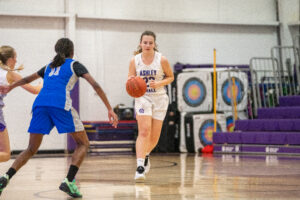
We begin on the court, where Panther Basketball secured an important January win over North Charleston, defeating the Cougars 44–33. The victory marked a special milestone for the program, as it was Coach Bryan Bednar’s first win as head coach at Ashley Hall. A memorable moment and a strong step forward for Panther Basketball.
Equestrian Qualifies Riders for Regionals
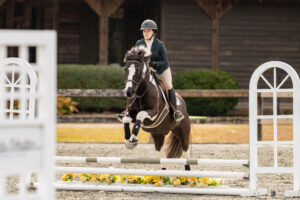
The Equestrian team delivered a standout performance in St. Simons, Georgia, where multiple Panthers qualified for Regionals in North Carolina. The weekend reflected the team’s continued growth and dedication, positioning them well as the season progressed.
Archery Reaches New Heights
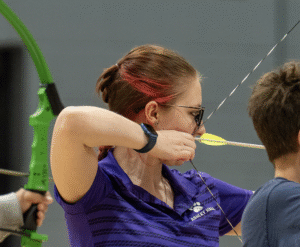
Archery continued its impressive run with 12 personal-best scores recorded at a recent tournament. One performance stood out in particular—senior Ella McCall shot a perfect score of 50 at the Lowcountry Shuffle Archery Tournament. The achievement marked a remarkable highlight in her senior season and underscored the program’s consistent excellence.
Looking Ahead
Several Panther teams will be back in action as winter athletics continue:
- Basketball will play its final home game of the season on February 5 against PCA
- Archery will compete in the State Qualifier at Northwood on February 7
- Track and Field will open its season at James Island on February 21
- Lacrosse will begin the 2026 season on the road at Academic Magnet on February 25
- Equestrian will compete in Timmonsville on February 28
Thank you for following this month’s Panther Recap. Stay connected with @AshleyHallPanthers for ongoing highlights, announcements, and stories from across our athletic community. PQV, Panthers!
A Quarterly Reflection from Dr. Anne T. Weston ’73
At Ashley Hall, each day brings new moments of discovery, connection, and growth. In this installment of The View from the Head’s Office, Head of School Dr. Anne Weston offers a window into the ideas, conversations, and experiences that shape the journey of every Ashley Hall student.
Strength in Community, Confidence in Growth
By Dr. Anne Weston
As we step into a new calendar year and ease ourselves back into the routine of life at Ashley Hall, I want to begin by wishing you a very happy New Year and thanking you for your continued commitment to our School. This season of transition—from rest back into rhythm—offers a natural moment to pause and reflect on the strength, spirit, and shared purpose that define our community.
Over the past few months, I have had the special gift of spending extended time with my own adult daughters. Watching them step more fully into themselves has been a powerful reminder of what it means to raise strong women—and how fortunate our students are to be surrounded by families and educators who believe so deeply in their potential. You are helping to build the future for a generation of brave, thoughtful, capable young women, and it is a privilege to partner with you in that work.
Across every division at Ashley Hall, I see that future taking shape each day. Our students are growing in confidence, curiosity, and character—supported by faculty who know them deeply and challenge them to reach their full potential. It is a joy to watch our girls progress through each stage of their Ashley Hall journey, developing the skills, self-assurance, and sense of purpose that will carry them forward.
Recently, I sat down with the Ninth Grade Student Council and asked them a simple question: What do you love most about the Upper School? Their answers were thoughtful, honest, and remarkably aligned. They spoke of community and support—of feeling known and valued. They shared how relationships expand in Upper School, as they mix more across grades and within their own class, and how they are met with an appropriate level of challenge that stretches them without being overwhelming.
Again and again, they returned to the importance of their relationships with teachers—relationships built on trust, respect, and genuine care. At Ashley Hall, those connections are foundational. Our faculty understands how to spark curiosity, guide students through moments of uncertainty, and help them develop the confidence to work through challenges independently. That combination of high expectations and unwavering support is, I believe, what truly sets the Ashley Hall experience apart. More of the same sentiments were beautifully captured in a recent Upper School video, which was created to support the current admission season as we work to attract new students to the Upper School. I hope you’ll take a moment to watch it and that it helps you understand how special the Ashley Hall experience truly is for our students.
In conversations, classroom visits, and quiet moments across campus, I see students taking intellectual risks, advocating for themselves, collaborating, and asking the kinds of questions that signal deep engagement. They are not only preparing for college; they are preparing to lead lives of empathy, resilience, and purpose. As Head of School, nothing makes me prouder.
During the break, my family spent time walking along the beach and beside a forest stream, and we found ourselves returning again and again to the image of flowing water. With my daughter Sarah’s permission, I’d like to share a reflection she wrote—it has stayed with me as we move into this new year:
A river is always moving, never in the same rhythm twice. Some stretches rush. Some slow to a crawl. Some carve open the earth. Some reflect the sky so clearly it feels like another world. And yet the flow never stops. A river does not live in the past or the future; it exists in its present motion. In so many ways, life asks the same of us—to stay present, unencumbered by what has been and with courage to face what lies ahead. We can let ourselves flow as a river. Together. With curiosity. With tenderness. With abandon. With intention.
As we begin 2026 together, this is my hope for our community—that we continue to move forward with intention and openness, grounded in our shared values and confident in the strength of our relationships. Ashley Hall is a place where girls challenge themselves, lift one another up, and are guided by educators deeply committed to their growth. It is a place where each student is known and valued, and where every young woman is encouraged to become the strongest version of herself.
Here’s to the year ahead—and to the extraordinary learning, leadership, and connection that continue to unfold at Ashley Hall each day.

Dr. Anne T. Weston ’73
Ashley Hall Head of School
What does it really feel like to be an Upper School student at Ashley Hall?
In our newest video, you’ll hear directly from the students themselves as they share what drew them here, what challenges and inspires them, and what makes this community feel like home. Their reflections offer an honest look at daily life in the Upper School—inside the classroom and beyond it.
From meaningful relationships with teachers to opportunities that encourage confidence, curiosity, and leadership, these voices reflect the heart of the Ashley Hall experience. We invite you to watch, listen, and learn more about what makes our Upper School a place where students are known, supported, and empowered to grow.

▶ Watch the video to hear their stories.