Back to News
Ashley Hall Life12/5/25
Bringing Botany to Life: Upper School Students Explore Sea Island Savory Herbs
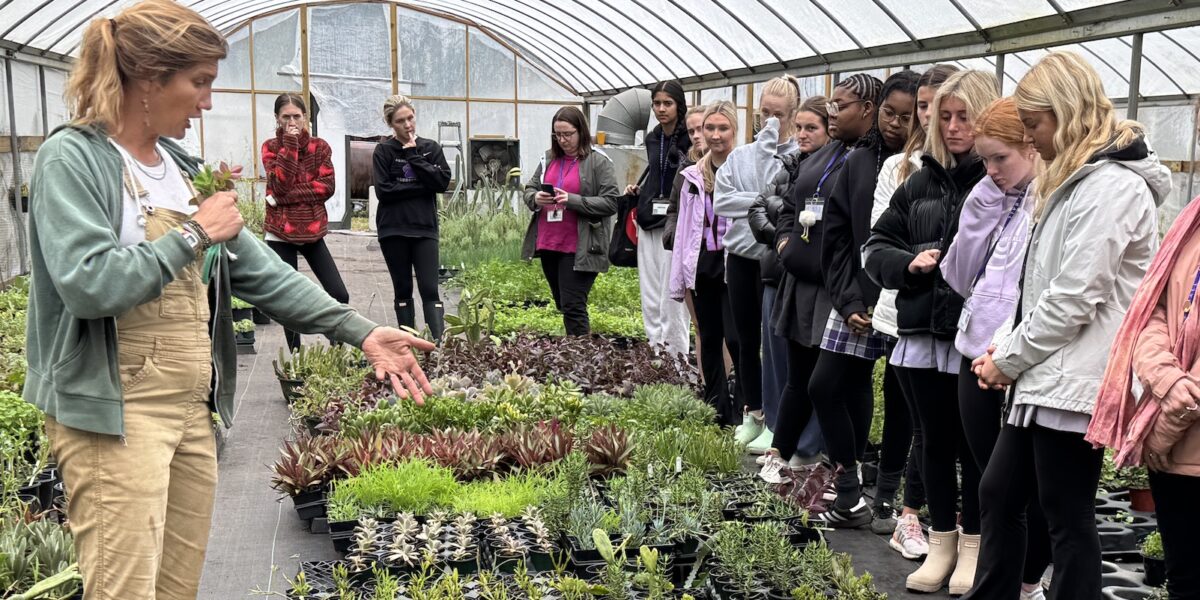
Learning came alive this week for Ashley Hall’s grade 11 and 12 botany students during a field trip to Sea Island Savory Herbs, a woman-owned and operated plant nursery on Johns Island specializing in herbs, succulents, perennials, and seasonal vegetables. What they encountered there—rigorous science, hands-on discovery, and inspiring female leadership—added new dimension to the concepts they’ve been studying in class.
At the nursery, owner Ella Cowen offered students a look into the history and daily operations of her working farm, as well as the science and tradition behind the many medicinal plants she cultivates. Students learned how common herbs are used in teas, salves, and toners—discovering firsthand how plants contribute to human health and well-being. From comfrey to mint, the group explored the rich connections between botany and everyday life.
The visit also provided a sensory adventure. One student sampled some of the more unusual plants, including the “eyeball plant.” After chewing one of its flower heads, she immediately understood why it has been used to relieve toothaches—the bioactive compound spilanthol temporarily numbs the mouth. The plant also has antioxidant, anti-inflammatory, analgesic, and antimicrobial properties, giving students a perfect example of the complexity of medicinal flora.
 She also tried “miracle fruit,” known for its ability to make sour foods taste sweet by briefly altering taste receptors. Holding the vibrant red berry in one of the field trip photos, she later tested the effect by eating an extremely sour citrus fruit. “It worked!” she said. The protein responsible—miraculin—is currently being studied for its potential to influence food preferences.
Throughout the tour, students applied their classroom learning about plant families, morphology, and adaptations to identify species and make connections to recent lessons—including how botanicals can even support forensic investigations. Their experience culminated in hands-on horticulture as they propagated herb cuttings to bring back to campus.
Reflecting on the impact of the day, Upper School Biology and Botany teacher Allison Bowden shared, “As we planted our cuttings, one senior looked over at me and said, ‘I just might major in botany!’ This simple statement was reaffirming to hear, for this course introduces students to the important role plants play in our lives. This week, as we wrapped up our deep dive into plant adaptations, students applied their knowledge of plant morphology and species identification to explore how flowers can be used in forensic investigations. Whether a student studies the medicinal benefits of plants, botanical biochemistry, or simply chooses gardening as a life-long hobby, I have achieved my goal to instill in my students an appreciation and understanding of the botanical world.”
Students echoed that enthusiasm. Liza Ziel ’27 reflected on a moment that stood out at the end of the visit, sharing her memory of Ms. Cowen’s words: “Women can do anything, no matter what it is—if you love it, you can do it.”
Zahirah Muhammad ’27 also shared the following reflections: “The botany field trip was amazing and such a unique experience! This was my first time going to a savory herb garden, and it was really cool to look at the different characteristics of plants, such as the variety of succulents, the coffee plant, mint, and rosemary. I also enjoyed the process of learning how to propagate cuttings and being able to take some home.”
This field trip offered students a deeper appreciation for the complexity and beauty of the plant world—and a meaningful connection to a local female entrepreneur whose work reflects both expertise and passion. For many, it opened new interests and possibilities, making the experience one that will continue to grow long after they returned to campus.
Share: